










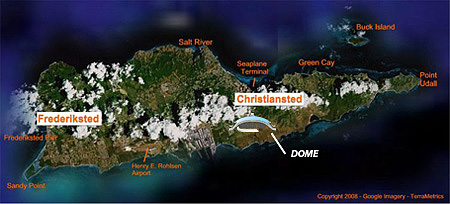


This intriguing jewel lies 17° 45' north latitude and 64° 45' west longitude and is considered to be one of the most beautiful resort areas in the Caribbean. St Croix is on Atlantic Standard time, which is one hour ahead of Eastern Standard time in winter months. Ruins of more than 100 sugar mills and great houses sporadically cover the island and offer an insight into the past and present culture of St. Croix. The fascination and allure of St. Croix belongs to its rolling hills, long stretches of white, sandy beaches, and an array of landscape from dry cactus in the east to a lush rain forest in the west.
Climate
St. Croix does not experience significant seasonal changes, therefore weather and temperatures are fairly consistent year round. The sun shines year-round with an average temperature of 80° during the day and around 70° most evenings, summer being a little warmer. Trade winds coming from the East blow seductively across the island to keep the humidity low. When it rains, the showers are over in a few minutes. We average 50 inches of rain a year, with September and October being less dry than the winter months. During rainfall, rooftops not only serve as musical instruments, but a passageway to the cistern, where the water is collected.
Populace
Since 1960, the U.S. Virgin Islands have nearly tripled in population. Estimates put the figure at over 50,000 on St. Croix, 50,000 on St. Thomas and 4,000 on St. John. St. Croix has been ruled under many different flags and to this day, islanders represent many nationalities and backgrounds with the majority being of African descent.
Further Information
Below are some very useful websites that cover local issues as well as cultural events.



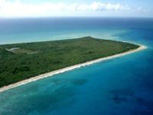 When the Antilles chain was thrust from the ocean floor more than a 150 million years ago, nature began carving intricate seascapes and cultivating exotic landscapes on what is now the US Virgin Islands. Still fabled for their beauty, the Virgins from a vast ocean playground where the history of man mingles with the magic of nature in the tangles of the rain forests, at the water's edge and in gardens beneath the sea.
St. Croix has plenty of magnificent beaches and locals find it too hard to rank them. The beautiful white sand goes for miles and the water's ever changing colors are a playground for tourists and residents equally.
Something special
A magical web for nature enthusiasts, St Croix has it all - rain forests, botanical gardens, turtles and the newest national park in the United States, Salt River Bay National Historical Park and Ecological Preserve.
One of the first underwater nature trails in the Caribbean, the Buck Island Reef National Monument has been a National Park site since 1961 and divers can explore its spectacular coral formations.

 Crucian culture is a rich Kallaloo stew of the old and the new, with elements of many countries blended into a wonderful whole. The primary ingredients are African traditions brought here during slavery with European-imposed adaptations. The Danes left behind their classic architecture and place names, and in the past century, people from Puerto Rico, many other Caribbean islands, and the US mainland have helped stir the pot.
Whether it's French or Fusion, Cajun or Italian, Sushi or Roti, foodies find a dazzling range of choices on St. Croix, a culinary destination where some of the world's best chefs have taken root.

 Settler's Handbook to the US Virgin Islands
The 201 page Settlers Handbook for the U.S. Virgin Islands is your guide to moving to St. Croix, St. John and St. Thomas.
Settler's Handbook to the US Virgin Islands
The 201 page Settlers Handbook for the U.S. Virgin Islands is your guide to moving to St. Croix, St. John and St. Thomas.
 Life in the Left Lane
 doesn't only explains why people drive on the left side in a car with left-side steering wheel, but it also paints a realistic and humorous picture of living on St. Croix.
Life in the Left Lane
Life in the Left Lane doesn't only explains why people drive on the left side in a car with left-side steering wheel, but it also paints a realistic and humorous picture of living on St. Croix.